Aussiedoodle Sports and Jobs: Putting the Breed's Instincts to Work
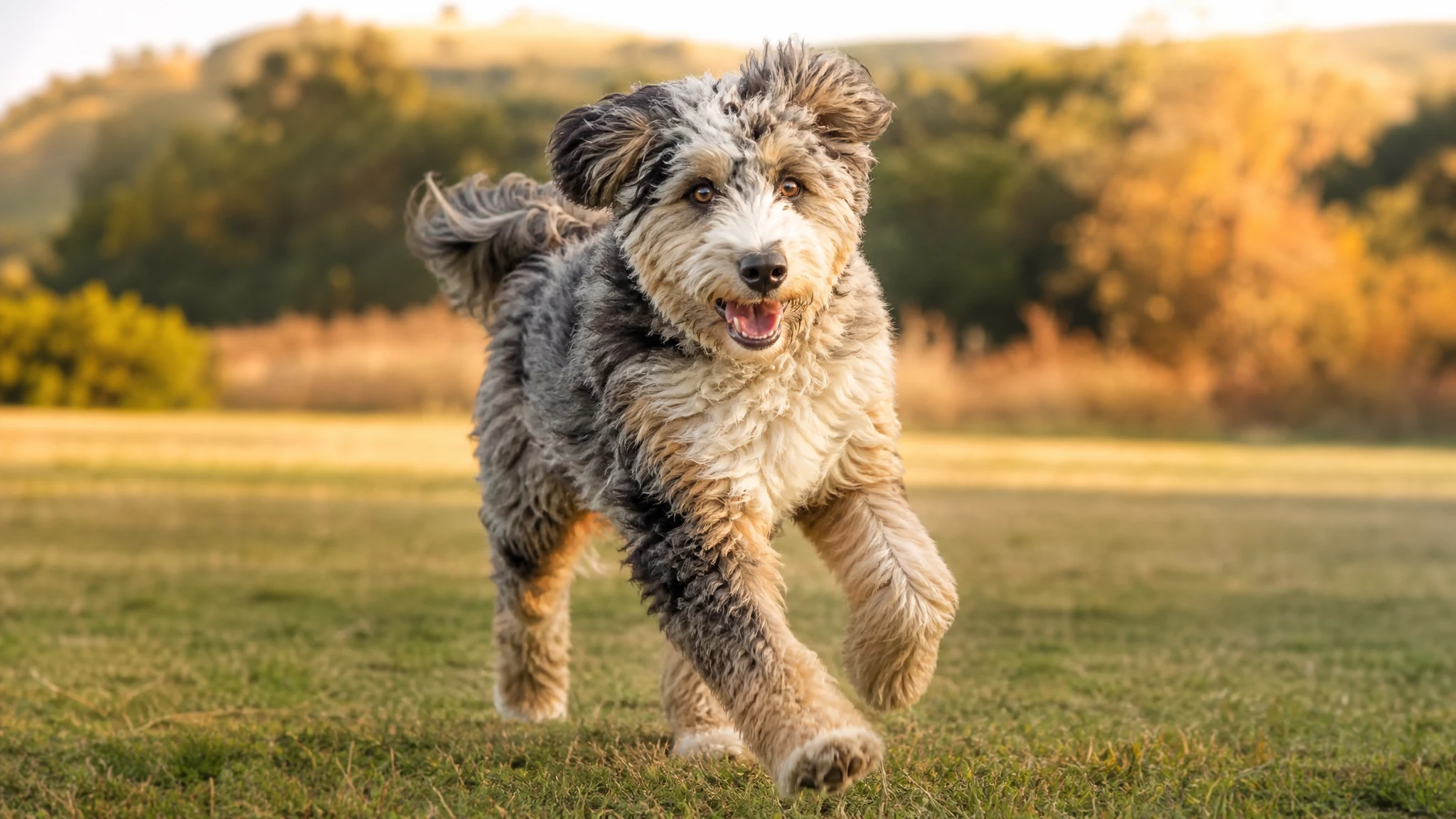
General training information. Every dog is an individual; for health or behavior concerns, see your veterinarian.
An Aussiedoodle with nothing to do will find something to do. It might be your couch cushions, the neighbor's kids, or the cat. The better plan is to give that energy a job.
This guide walks you through choosing and starting Aussiedoodle sports at home, without special gear or a big budget. Aussiedoodles are an Australian Shepherd and Poodle cross, and individual dogs vary a lot. Treat everything here as a starting point and let your own dog show you what they enjoy.
Why Aussiedoodle sports make sense
According to Canine Bible, the Aussiedoodle was bred as a companion that combines Australian Shepherd herding drive and athleticism with Poodle intelligence and a low-shedding coat. Hundeo rates the exercise need as high and says about two hours of active exercise a day. Canine Bible suggests 60 to 90 minutes for adults plus mental stimulation, and Oodlelife says 30 to 90 minutes of walks plus play. These pet-information sites disagree, and none is a breed standard, so watch your own dog. A dog who is destructive or restless after a long walk likely needs more thinking work, not just more miles.
Oodlelife also notes that boredom can lead to destructiveness. Canine Bible and Oodlelife both mention herding tendencies, including a chance the dog will try to herd children or other pets. Sports give those instincts a legal outlet.
The sports and jobs that fit the breed
Canine Bible lists these activities for the Aussiedoodle: agility, trick training, therapy work, advanced obedience, hiking and swimming. Wikipedia lists a wider set for the Australian Shepherd parent: herding (stockdog work), agility, dock diving, obedience, rally, tracking, disc and flyball. Here is what each one asks of your dog.
Agility
Your dog runs a course of jumps, tunnels and weave poles, guided by your voice and body. It rewards speed, focus and teamwork. It is a natural fit for a dog with herding athleticism and a quick mind.
Trick training
This is the easiest place to start. Spin, bow, back up, close a door, fetch a named toy. Tricks build handling skills and give a smart dog a lot of mental work in a small space.
Advanced obedience, rally and tracking
Obedience tests precise skills such as heeling, stays and recalls. Rally has you move through a course of signs, each showing an exercise to perform. Tracking uses the dog's nose to follow a scent trail. All three reward patience and clear communication.
Therapy work
Canine Bible lists therapy work as a possible job. Hundeo describes the breed as very good with children, and Canine Bible calls the temperament cheerful, affectionate and people-oriented. Those are general descriptions, not a promise about your dog. Therapy programs set their own requirements, so check with the specific organization before you plan around it.
Hiking and swimming
These are the lowest-barrier jobs. They need no club and give you a dependable way to burn energy together. Introduce water gradually and let the dog set the pace.
Herding, dock diving, disc and flyball
These come from the Australian Shepherd side, per Wikipedia. Whether your Aussiedoodle will enjoy them depends on the individual dog. Try an intro session before you invest time or money.
Materials you will need
- A well-fitted harness and a standard leash.
- Small, soft treats your dog loves, cut pea-sized, plus a treat pouch.
- A few toys, such as a tug and a ball, to use as rewards.
- Household items for a home course: broomsticks, buckets, cushions, a blanket to make a tunnel.
- A water bottle and bowl for you and the dog.
- A notebook or phone to track what your dog enjoys.
Canine Bible and Oodlelife both say Aussiedoodles are prone to weight gain in Oodlelife's words, so count treats as part of the day's food.
How to get started: step by step
Step 1: Check your foundation
Sports run on basic skills: sit, down, stay, come when called, and walking on a loose leash. Canine Bible says positive reinforcement works best for this sensitive dog and recommends starting obedience as soon as the dog comes home. If those basics are shaky, start with our complete Aussiedoodle training guide and come back.
Step 2: Get a vet check first
Ask your veterinarian whether your dog is ready for the activity you have in mind. This matters most for puppies and for dogs that jump a lot, since growing joints need care. Hip dysplasia is described as the biggest health concern by Oodlelife, and the Poodle Club of America lists hip dysplasia and patellar luxation among Poodle health concerns. Your vet can tell you what applies to your dog. Do not guess, and do not give any medication or supplement for sports without veterinary advice.
One more point from Wikipedia: the Australian Shepherd is one of the more commonly affected breeds for the MDR1 mutation, which causes drug sensitivity. Ask your vet whether this is worth discussing for your dog.
Step 3: Pick one or two activities, not ten
Choose based on your life. If you live near trails, start with hiking. If you have a yard, try tricks and a home agility course. If your dog loves water, try swimming. Give each new activity a few short sessions before you decide it is not a fit.
Step 4: Teach in tiny pieces
Break each skill into small steps and reward every small success. For a weave pole, that means rewarding one pass through two poles, then three, and so on. Canine Bible notes that these dogs bore easily, so keep sessions short, 5 to 10 minutes, and end while your dog still wants more.
Step 5: Vary the session
Mix a physical skill, a thinking game and a calm moment in each session. A recall game, then a trick, then a sniff walk keeps a quick-minded dog engaged. Change the order often.
Step 6: Build impulse control into every game
Ask for a sit before the leash goes on, a stay before the toy is thrown, and a release word before every obstacle or retrieve. This keeps the excitement of herding-style drive from turning into nipping, circling or chasing. Reward calm.
Step 7: Find a local class or club
Once your dog is comfortable with the basics, look for classes in your area. Dog training clubs, community training centers and AKC-affiliated clubs often offer beginner agility, rally, obedience and trick classes. Watch a class before you sign up. Look for trainers who use rewards and treat the dog kindly, in line with the American Veterinary Society of Animal Behavior position that reward-based methods are the humane choice.
Step 8: Check entry rules before you compete
The AKC does not recognize the Aussiedoodle as a breed, according to Canine Bible. Whether mixed-breed dogs can enter a given AKC performance event depends on that program. Check with the AKC and with the club hosting the event for current rules, and ask about mixed-breed options at other organizations. Many dogs enjoy sports for years without ever entering a trial.
Tips for success
- Use food and play. Alternate treats with a quick game of tug so the dog stays excited.
- Keep it fun. If your dog avoids an obstacle, make it easier or lower, and try again later.
- Protect the coat. Canine Bible notes that wavy or curly coats mat easily. After swimming or hiking, check for burrs, dampness and tangles.
- Watch the weather. Heat and hard surfaces are tiring. Bring water and rest often.
- Rest after hard days. Plan an easy day after a big outing.
- Be careful around kids and pets. Oodlelife warns that herding can mean scratches or bites. Supervise and redirect to a toy or a task.
Common mistakes to avoid
- Too much, too soon. Long, repetitive sessions wear out joints and attention.
- Skipping the basics. A dog who cannot wait or come when called will struggle in any sport.
- Using harsh corrections. Never use shock, prong or choke collars, scruffing or dominance methods. They damage trust, and Canine Bible describes this as a sensitive dog.
- Exercise without thinking work. A tired body does not always mean a satisfied mind. Add puzzles, scent games and new tricks.
- Ignoring separation stress. Canine Bible lists separation anxiety as a challenge. Sports help, but they do not replace practice at being alone calmly.
- Treating every dog the same. Sizes vary a lot. Canine Bible gives roughly 14 to 23 inches and 25 to 70 pounds, depending on the Poodle size used. A small dog and a large one may suit different obstacles and heights.
What to expect
Many owners find that regular training and exercise may help a high-energy dog settle more easily at home. Dogs given mental work often seem less likely to turn to chewing and other boredom habits, though results differ from dog to dog. Progress in a sport may take weeks or months, and some dogs will simply prefer hiking and swimming over a ring. That is a fine outcome.
Per Canine Bible, life expectancy is about 12 to 15 years, and Hundeo gives 10 to 15 years. Those are rough figures from pet-information sites, not promises. Whatever the number, a sport you both enjoy is a good way to spend those years together. Check in with your veterinarian regularly as your dog ages, and adjust the work to fit.