How to Potty Train a Aussiedoodle Puppy
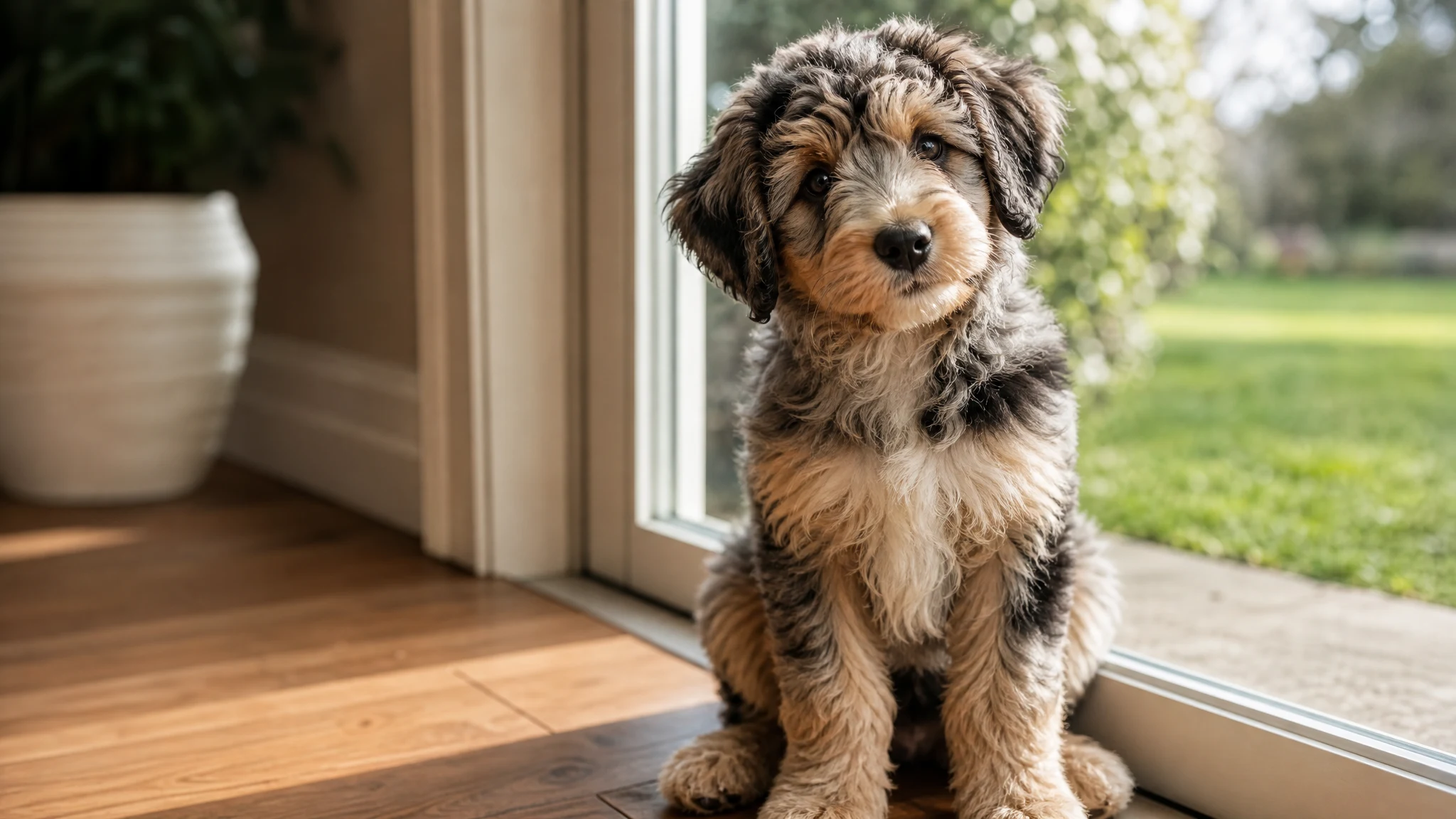
General training information. Every dog is an individual; for health or behavior concerns, see your veterinarian.
Aussiedoodle potty training goes best when you treat it as a routine you build, not a lesson you teach once. This guide covers how to potty train a Aussiedoodle puppy with a schedule, a crate, quick rewards, and calm handling of accidents.
The Aussiedoodle is a cross between an Australian Shepherd and a Poodle. Pet-information sites such as Hundeo describe it as very trainable. That helps, but a smart puppy still needs a clear plan and plenty of repetition.
What Makes Aussiedoodle Potty Training Different
There is no breed standard for the Aussiedoodle, and no AKC breed page for it. What we know comes from pet-information sites, so treat the details below as general guidance. Every puppy is an individual.
A few points from those sites shape how you house train:
- Size varies a lot. Canine Bible lists a range of roughly 14 to 23 inches tall and 25 to 70 pounds, depending on the size of Poodle used in the cross. A smaller adult may need more frequent trips than a larger one, so watch your own puppy rather than a chart.
- Sensitive and people-oriented. Canine Bible says positive reinforcement works best for this sensitive dog. Scolding over an accident can backfire.
- Bores easily. Canine Bible and Oodlelife note that these dogs get bored, so short, varied sessions suit them.
- Start early. Canine Bible advises starting obedience as soon as the dog comes home. Potty training is part of that.
- Separation anxiety. Canine Bible lists it as a challenge. This matters for how you introduce the crate.
The sources do not give a breed-specific bladder timeline, so ask your veterinarian how long your puppy can reasonably wait between trips at its current age.
Materials You Will Need
- A crate sized so the puppy can stand, turn around and lie down. Too much extra room invites a corner accident. If your puppy will grow a lot, use a crate with a divider.
- Small, soft treats you can break into pea-sized pieces. Aussiedoodles are described by Oodlelife as prone to obesity, so count potty treats as part of the daily food.
- A leash and a flat collar or harness for trips outside.
- An enzyme-based cleaner made for pet messes. Ordinary cleaners can leave a scent that draws the puppy back to the same spot.
- A designated potty spot in the yard.
- A simple log (paper or phone) to track meals, naps, trips and accidents.
- A short cue word such as "go potty."
- A few chew toys for crate time and downtime.
Step-by-Step: How to Potty Train a Aussiedoodle
Step 1: Pick the potty spot and the cue
Choose one area outside and take your puppy there on leash every time. Stand still and stay quiet. Say your cue word once or twice as the puppy sniffs and circles.
Walking around the yard makes the trip into play. For a puppy that loves people, keep the first minute boring so the potty is the reward point.
Step 2: Build a schedule around the puppy's day
A predictable day does most of the work. Take your puppy out at these times:
- First thing in the morning
- Right after every nap
- Shortly after each meal and after drinking
- After a play session or any burst of excitement
- Before crate time and before bed
- At regular intervals in between, even if the puppy seems fine
Feed meals at set times rather than leaving food out. A regular intake makes output easier to predict. Your veterinarian can tell you how much and how often to feed.
Young puppies need frequent trips, including overnight at first. Exact intervals vary by puppy, so use your log and your vet's advice to fine-tune the timing.
Step 3: Reward the moment it happens
When your puppy finishes going outside, praise in a cheerful voice and give a treat right away. Timing matters. A treat given after you walk back inside rewards walking, not peeing.
Reward-based training is the approach recommended by the American Veterinary Society of Animal Behavior (AVSAB). It also fits what Canine Bible says about this sensitive cross.
Once the puppy has finished, a short play or a walk can serve as a second reward. That teaches the puppy that going quickly leads to fun.
Step 4: Use the crate as a resting place
Many puppies avoid soiling the place where they sleep, which is why crates help with house training. The crate should feel safe, not like a punishment.
- Toss treats inside and let the puppy wander in on its own.
- Feed a few meals in the crate with the door open, then closed for a minute or two.
- Give a chew toy and build up time in small steps.
- Take the puppy straight outside when you open the door. Do not stop for greetings first.
Because Canine Bible lists separation anxiety as a challenge for this cross, go slowly. If your puppy panics, cries hard or gets frantic in the crate, stop pushing and talk to your veterinarian or a certified reward-based trainer. A puppy that is upset can also have accidents in the crate, which is a stress response and not a training failure.
Never leave a young puppy crated longer than it can comfortably hold it. If you work away from home, arrange a midday break with a family member, neighbor or pet sitter.
Step 5: Supervise, then widen the space
When the puppy is out of the crate, keep it where you can see it. Use baby gates or a leash tied to your belt. Watch for sniffing, circling, sudden stops in play or heading toward a door. These are signs to scoop up the puppy and head outside.
Aussiedoodles are people-focused, so a puppy that follows you around is easy to supervise. As accidents drop off, give access to one more room at a time. Pull back if accidents return.
Step 6: Teach the puppy to tell you
Some puppies learn to sit by the door, paw it or give you a long look. You can shape this by having the puppy touch a bell or the door with its nose before you open it. Reward the touch, open the door and go to the potty spot.
Be consistent. A bell used inconsistently can turn into a game. Canine Bible lists barking without consistent cues as a challenge, so a clear, quiet signal is a better habit than barking at the door.
Step 7: Fade the treats, keep the praise
Once the puppy goes reliably outside, switch from a treat every time to a treat now and then, plus praise. Keep the schedule, though. Most dogs still need regular trips for life, just with longer gaps.
Handling Accidents Without Punishment
Accidents will happen. How you respond decides whether your puppy learns or just learns to hide.
- If you catch it mid-act: Calmly say "oops," scoop up the puppy and carry it outside. Reward if it finishes there.
- If you find it later: Clean it up and move on. The puppy cannot connect a scolding to something that happened minutes ago.
- Never rub the puppy's nose in it, yell or punish. These methods do not fit reward-based training and can make a sensitive puppy fearful of going in front of you.
- Clean thoroughly with an enzyme cleaner so the spot does not become a repeat target.
Then ask what went wrong. Was the gap between trips too long? Did the puppy have too much freedom? Was it a big play session or a big drink beforehand? Adjust the plan, not the puppy.
Common Mistakes to Avoid
- Waiting for the puppy to ask. Young puppies often give little warning. Take them out on schedule.
- Long trips with no payoff. If nothing happens in a few minutes, go back in, crate or supervise closely, and try again soon.
- Too much freedom too soon. A bright puppy that gets whole-house access will use it.
- Playing before the potty. Outdoors is exciting. Potty first, then play.
- Skipping exercise and mental work. Hundeo rates this cross as high-energy, and Oodlelife warns of boredom and destructive habits without stimulation. A tired, mentally busy puppy is easier to manage.
- Changing the routine every few days. Consistency across everyone in the household matters more than any single trick.
- Ignoring the coat. Canine Bible notes that wavy or curly coats mat easily. Keep the hair around the back end tidy, and ask a groomer how to do it safely, so the puppy stays clean and comfortable.
- Giving too many treats. Use tiny pieces so training does not add up to extra weight.
Quick Daily Checklist
| When | What to do |
|---|---|
| Wake-up | Straight outside to the potty spot, on leash |
| After meals and water | Out again, reward when finished |
| After naps and play | Out first, then free time |
| Between trips | Supervised or crated with a chew toy |
| Bedtime | Last trip, then crate |
| Any accident | Clean with enzyme cleaner, note it in the log, adjust the plan |
How Long Does It Usually Take?
Nobody can promise a date. The sources we checked give no breed-specific timeline for house training an Aussiedoodle, and puppies differ widely by age, size, health and how steady the routine is.
Many owners see progress over a matter of weeks, with setbacks along the way, and reliable habits can take months. Smaller puppies and those with irregular schedules may take longer. Treat any time frame you read as a rough guide.
Signs of progress to look for:
- Fewer accidents each week
- Longer stretches between trips
- The puppy heading to the door or pausing to look at you
- Calmer, quicker potty breaks outside
Setbacks are common during growth spurts, moves, new family members or changes in the schedule. Go back a step, keep it calm and keep rewarding.
When to Call Your Veterinarian
If your puppy has frequent accidents despite a solid routine, strains, seems to be in discomfort, drinks much more than usual or suddenly regresses, talk to your veterinarian. Medical issues can look like a training problem, and only a vet can sort that out. Do not give any supplement or medication for this without veterinary guidance.
If the crate or being alone causes real distress, ask your vet about next steps and consider a certified trainer who uses reward-based methods.
Final Thoughts
A smart, people-loving puppy responds well to a clear routine, quick rewards and a calm owner. Keep the schedule tight, make the crate a good place, and let accidents teach you where the plan has gaps. House training a Aussiedoodle takes patience, and the effort tends to pay off in a dog that is easier to live with.