Socializing a Aussiedoodle With Kids, Dogs and Strangers
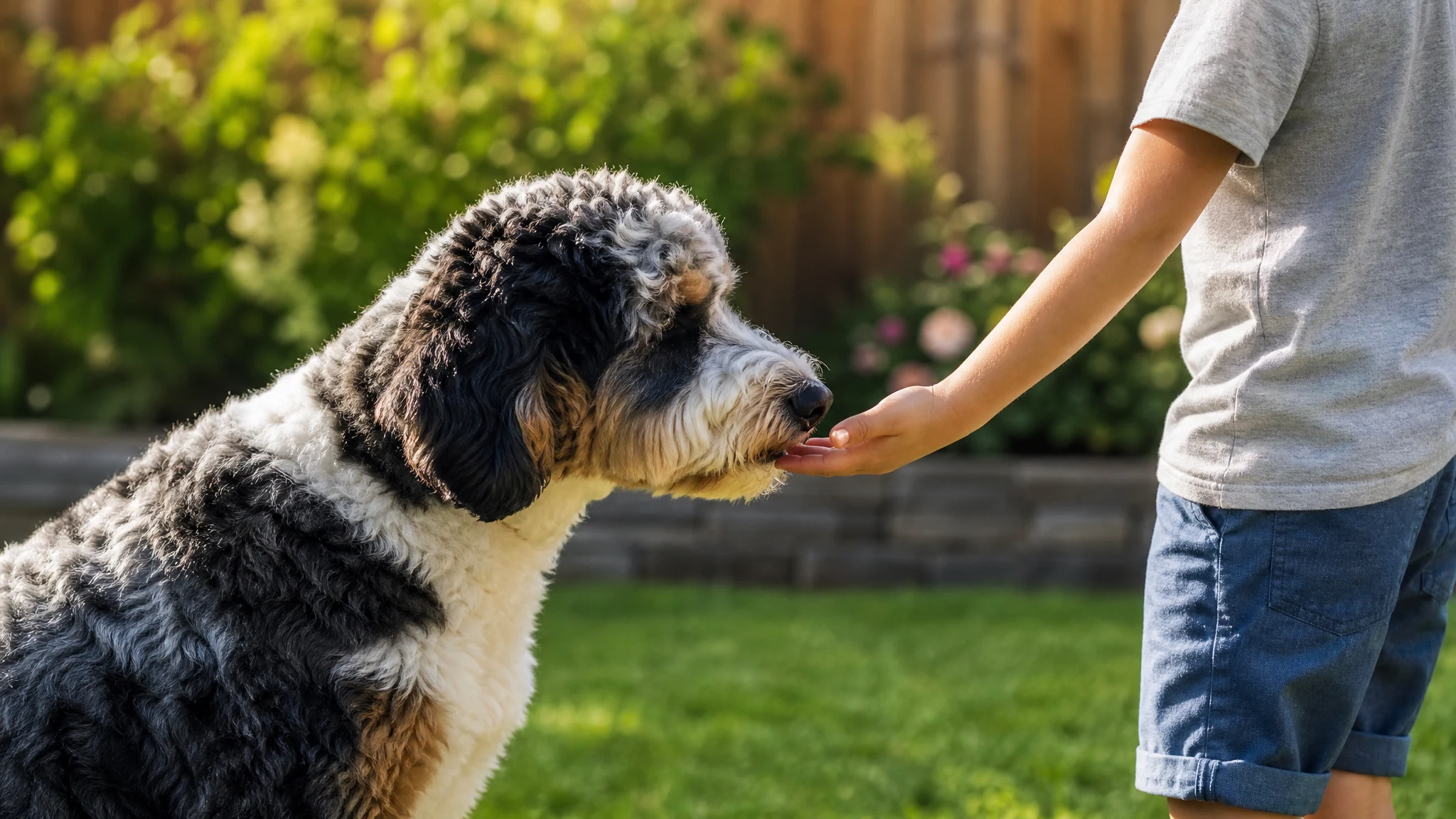
General training information. Every dog is an individual; for health or behavior concerns, see your veterinarian.
Aussiedoodle socialization is mostly about teaching a smart, people-loving dog what to do when new things show up. New things include a toddler's squeal, a stranger at the door, or a dog across the street.
This guide gives you a step-by-step plan. It also covers the question many families ask first: are Aussiedoodles good with kids? Individual dogs vary, so treat this as a framework, not a promise.
What to Know About the Breed First
The Aussiedoodle is a cross of the Australian Shepherd and the Poodle. Canine Bible describes it as a hybrid that the American Kennel Club does not recognize, so there is no official breed standard. Size and temperament depend partly on which Poodle size was used and how the cross was bred.
Canine Bible describes the temperament as cheerful, affectionate, social and people-oriented. Hundeo rates the dog as very good with children and very trainable. Those are pet-information sites, not breed-club ratings, so use them as a starting point only.
Both sites also point to a catch. Oodlelife says Aussiedoodles may try to herd children or other pets, with a risk of scratches or bites. Canine Bible adds that this dog can struggle with separation anxiety and with barking when there are no consistent cues.
Hundeo rates the exercise need as high. Its figure is about 2 hours of active exercise a day, while Canine Bible says 60 to 90 minutes and Oodlelife says 30 to 90 minutes of walks plus play. The sources disagree, so ask your veterinarian what suits your dog. A tired, mentally busy dog is easier to socialize than a bored one.
For this breed, then, socialization means two jobs. You are building comfort with new people, places and dogs. You are also teaching the herding instinct where to go.
Materials You Will Need
- Small, soft treats your dog loves, cut into pea-sized pieces
- A well-fitted flat collar or harness and a standard 6-foot leash
- A long line for open spaces
- A mat or bed for a settle spot
- Baby gates or an exercise pen to create breaks
- A chew, lick mat or stuffed toy for calm time
- A helper dog owner with a calm, vaccinated dog (ask your veterinarian what vaccination status is needed before dog meetings)
- Patience and a notebook to track what your dog finds hard
Step-by-Step Socialization Plan
Step 1: Set the foundation at home
Before you introduce anyone, teach three cues in a quiet room: sit, a settle on the mat, and a recall word. Canine Bible and Oodlelife both point to positive reinforcement as the best fit for this sensitive dog. Oodlelife also says to start obedience as soon as the dog comes home.
Keep sessions short and vary them. These dogs bore easily, according to Canine Bible, so switch between cues and add a small game.
If you need a full training base, the complete Aussiedoodle training guide covers the core skills in order.
Step 2: Make new things predictable and rewarding
Start with the world at a distance. Sit on a bench near a quiet sidewalk and feed a treat each time your dog notices something new, such as a bike, a hat or a person walking by.
The goal is a simple link: new thing appears, good thing happens. Do not push your dog closer. Let your dog choose to approach, and end the session while your dog is still relaxed.
Ask your veterinarian when it is safe to take a young puppy out in public places, since vaccination timing matters. Until then, carry the puppy, sit in a friend's yard, or meet healthy, vaccinated adult dogs at home.
Step 3: Introduce strangers on your dog's terms
Aussiedoodles are described as social and people-oriented, but that can show up as jumping or mouthing. Teach polite greetings.
- Ask the stranger to stand still and ignore the dog at first.
- Wait for your dog to settle, then ask for a sit.
- Let the person offer a treat from a flat, low hand, or toss it near their feet.
- Pet only if your dog leans in. Stroke the chest or shoulder, not the top of the head.
- End the greeting before excitement builds.
If your dog hides, stiffens or barks at a visitor, add distance and try again later. Do not force contact.
Step 4: Introduce your Aussiedoodle to children
Hundeo rates the Aussiedoodle as very good with children. Even so, the herding note from Oodlelife is a reason to supervise every meeting. Dogs of any breed can be overwhelmed by a fast, loud child, and a herding dog may respond by nipping at heels or circling.
Set these ground rules:
- An adult is within arm's reach whenever the dog and a child share space. Never leave them alone together, even for a minute.
- Teach children to stay calm, keep hands low and avoid grabbing, hugging or climbing on the dog.
- Children do not approach the dog while it eats, chews or rests on its bed.
- Give the dog a gated escape space and let it go there anytime.
- Let children give treats by dropping them on the floor or placing them on a flat hand, under adult guidance.
Practice with one calm child at a time. Have the child stand still while the dog sits for a treat. Then add slow walking. Add running and play only after the dog stays relaxed when kids move normally.
Step 5: Manage herding and guarding behavior around kids
Watch for crouching, staring, circling, chasing, heel nipping or blocking a child's path. These are the herding habits Oodlelife warns about.
Do not punish the dog for them. Calmly stop the movement, call your dog away, and reward a sit or a trip to the mat. Then give the energy a legal outlet, such as fetch, a flirt pole or a food puzzle.
Be clear with children about game rules. Running and shrieking games near the dog can set off chasing, so keep them in a separate area until your dog is reliable. If your dog growls, snaps or guards food or toys near a child, separate them and contact a qualified, reward-based trainer or your veterinarian.
Step 6: Introduce other dogs gradually
The sources reviewed give no reliable rating for how Aussiedoodles get along with other dogs. Check with the breeder, rescue or your trainer about your own dog's history, and watch your dog's behavior instead of assuming.
Aussiedoodle socialization with other dogs works best in stages.
- Parallel walks. Walk with a calm, friendly dog and handler, keeping a comfortable distance. Close the gap over several outings as both dogs stay loose.
- Short, leashed greetings. Keep the leash loose and let the dogs sniff for a few seconds, then calmly walk away together.
- Off-leash meeting in a fenced space. Use a neutral area and drop the leashes only if both dogs look relaxed. Watch for bouncy, loose body language and play breaks.
- Home visits. Pick up toys and chews first. Introduce the dogs outside, then bring them in together.
With an Aussiedoodle with other dogs, herding can look like chasing, nipping at legs or bossy body blocking. Interrupt early, call your dog away and reward a calm recall. Keep play sessions brief and end them before the dogs get too wound up.
Step 7: Build calm alone time
Canine Bible flags separation anxiety for this breed, and a dog that cannot settle is harder to socialize. Practice short absences behind a gate with a chew, then return before your dog gets upset. Lengthen the time slowly.
If your dog panics when left, talk with your veterinarian or a reward-based behavior professional.
Step 8: Repeat in new places
Rotate between locations: a quiet street, a pet-friendly store entrance, a friend's yard. Keep each outing short and positive. Once your dog is relaxed in one setting, change just one variable at a time, such as more people or a busier sidewalk.
Tips for Better Results
- Watch body language. Yawning, lip licking, turning away and a tucked tail mean your dog needs more space.
- Pay for calm behavior. Rewards for quiet sitting teach more than rewards for excitement.
- Exercise first. A walk or a puzzle before a visitor arrives helps your dog focus.
- Keep treats small so your dog can train for longer. Canine Bible and Oodlelife note that this dog can gain weight, so count treats toward daily food.
- Groom the coat. Canine Bible notes that wavy or curly coats mat easily, and a dog who dislikes handling is harder to introduce to visitors. Pair brushing with treats.
Common Mistakes to Avoid
- Flooding. Dragging a nervous dog into a crowd or dog park can deepen fear.
- Assuming the breed is safe with kids. A friendly rating does not replace supervision.
- Skipping the settle cue. A dog that only knows excitement will be hard to manage around guests.
- Letting herding practice continue. Chasing kids or dogs can become a habit if it keeps working.
- Using harsh methods. The American Veterinary Society of Animal Behavior (AVSAB) recommends reward-based training and advises against punishment-based tools and dominance methods. These can raise fear and stress, especially in a sensitive dog.
- Overdoing it. Long, busy outings can leave a dog overstimulated. Short and successful beats long and chaotic.
What Results to Expect
With steady, reward-based practice, many Aussiedoodles may learn to greet people politely, settle around children and share space with other dogs. Progress varies with the dog's age, background and personality, and no plan can promise a particular outcome.
Expect setbacks during growth spurts, new environments or busy weeks. Go back one step, keep sessions easy and keep rewarding calm behavior. If you see fear, persistent guarding or bites, pause the plan and contact your veterinarian, who can rule out health causes and refer you to a qualified professional.
Quick Checklist
- Teach sit, settle and recall at home.
- Pair new sights and sounds with treats at a distance.
- Practice polite greetings with calm strangers.
- Supervise every child and dog meeting, and give the dog an escape space.
- Interrupt herding early and redirect it.
- Introduce dogs in stages, starting with parallel walks.
- Build calm alone time.
- Repeat in new places, changing one thing at a time.